Thursday, April 10, 2014

Re-Defining Being a Princess


I love this video! It's what being a great role model is about. Here's a wonderful excerpt from DoSomething and Disney - not just Barbie Dolls anymore!
When we think of Disney Princesses, we likely think of little girls dressed up in pastel-colored costumes, trying hard to look beautiful, and perhaps to look older.  Disney is currently trying to change this image.  Here's everything your heart desires to know about their rebranding:

  • Disney is rebranding their princesses to emphasize qualities such as trust, bravery, and kindness, over beauty.
  • They recently released a video about celebrating the princess inside every young girl. You can check out the video here!
  • In recent years there has been a lot of criticism about the effects of princess figures on young girls.
What do you think? Do Disney princesses make good role models for pre-teens? Who do you think young girls should be looking up to?


Disney presents the 'I Am A Princess' video. This is a celebration of what it truly means to be a Princess, today. To be brave. To be kind. To be generous and compassionate. Join Disney as we celebrate the Princess inside every young girl. Long may they reign! 

Wednesday, December 4, 2013

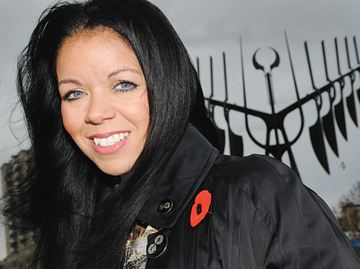
Barrie Realtor gives time and energy to inspire

A Realtor who took to the boxing ring for abused women, who engineered a flash mob downtown for International Women’s Day and who assembled a team of women to pull a train is this year’s Spirit Catcher Award winner. 

Barrie Realtor gives time and energy to inspire

Stan Howe
Shannon Muree will receive the Spirit Catcher Award at a Barrie Community Foundation reception tonight at the Southshore Community Centre. The junior winner is Mackenzie Oliver, founder of the I Love Me Club.
Shannon Murree, 43, will be recognized at a Barrie Community Foundation reception tonight, along with youth award winner, Mackenzie Oliver, who started the I Love Me Club which encourages kids to raise funds for charities.
Murree, a mother of three, said she’s honoured to be this year’s adult inductee into the Order of the Spirit Catcher – a city program that recognizes those who volunteer selflessly to the community.
“I think what clinched it was the diversity. It just wasn’t one thing,” she said.
“I’m passionate about our city and revitalizing our downtown and taking it back. I really believe in the One Billion Rising. Last February I took on the boxing for the Women and Children’s Shelter and slept in a tent. What didn’t I do?”
With sons ages 10 and 18, and a 16-year-old daughter, Murree has enough to keep her busy.
But as well as working for Re/Max, she’s also into real estate investment and property management. And she’s working towards becoming a trainer with the Real Estate Investment Network.
Still she makes time to give to Barrie.
“Everything I did was filled with passion. I’m always encouraging everyone to do a small thing. Every person doing one thing will have a ripple effect. I hope what I do will rub off on people,” she said, adding it’s important for her to set an example for her kids.
“I give a lot of my time and my time is limited. I just believe it’s the right thing to do. “We all have responsibilities. Be the change you want to see in the world.”

Saturday, November 30, 2013

The inequality we don’t talk about

Everyone is worried about inequality. Everyone has a theory about why the rich are getting richer, while the gap between the haves and have-nots is becoming more entrenched. Everybody’s got a favourite villain – globalization, technology, greedy bankers with too much power, the decline of unions, and on and on.

But the roots of inequality are also social. And there is one gap no one likes to talk about: the marriage gap.
Two things happened in the 1970s. Family income began to stagnate and family structures began to change radically. Divorce rates soared and marriage rates began to fall. More women began to have children outside marriage, and the percentage of female-headed families began to climb. In Canada, about 25 per cent of babies are now born out of wedlock. In the United States, it’s 41 per cent. In Canada, just over 19 per cent of children live in single-parent families, mainly single mothers, and another 16.3 per cent live with parents who are common-law, according to Statistics Canada.
The confluence of these trends is no coincidence, says Russ Roberts, a research fellow at Stanford’s Hoover Institution. The rise in female-headed households has helped create the great stagnation in family incomes. The rise of divorce, the decline of marriage and the growth in nonmarital motherhood have been much more dramatic among lower-middle-class and poor families than among the rich.
The marriage gap has created a vast amount of inequality. Lone-parent families in Canada are four times more likely to be poor than two-parent families are. The basic reason is obvious: Single mothers have far less in the way of financial resources, especially if they have less education and fewer skills.
Upper-middle-class two-parent families can invest far more time and resources in their children than lower-middle-class single mothers can, no matter how good their intentions. But the impact of family structure on children goes far beyond money. Kids from lone-parent families do worse on many measures. And the marriage gap is reducing upward mobility and sharpening the class divide. “Because the breakdown of the traditional family is overwhelmingly occurring among working-class Americans of all races, these trends threaten to make the U.S. a much more class-based society over time,” writes Isabel Sawhill of the Brookings Institution.
Canada is not the same as the United States, and distinctions are important. But the general trends apply to us as well. And the children most at risk in lower-income single-parent homes are boys. In a widely cited report published last spring, MIT economists David Autor and Melanie Wasserman drew a direct link between the rising tide of fatherlessness and the growing failure of boys in school and the labour market.
“Males born into low-income single-parent headed households – which, in the vast majority of cases are female-headed households – appear to fare particularly poorly on numerous social and educational outcomes,” they wrote. It’s not just that the girls are outperforming them. It’s that the boys are doing worse.
Changes in the labour market are not the only reason these boys are in trouble – not even the biggest one. Boys without fathers tend to develop serious behaviour problems at an early age. They’re more antisocial and aggressive, more disruptive, more likely to drop out and get in trouble with the law – and become less employable than ever. They are far less inclined to get married, but quite likely to have kids. Which means that the class divide is likely to be self-perpetuating. As the authors warn, “the poor economic prospects of less-educated males may create differentially large disadvantages for their sons, potentially reinforcing the development of the gender gap in the next generation.”
It would be nice to think we could close the marriage gap with more income supports for single mothers, higher minimum wages and all-day kindergarten for their kids. Frankly, that seems like wishful thinking. Bribing people to get married probably wouldn’t work either. This is what’s known as a hard problem, and no one likes to talk about it for fear of sounding reactionary and moralistic. But if we’re really interested in the roots of inequality, ignoring it is a big mistake.

Monday, November 25, 2013

A Warning to Teenagers Before They Start Dating

Originally posted in New York Times 

BOISE, Idaho — After studies emerged more than a decade ago showing that the highest rates of physical and sexual assault happen to women ages 16 to 24, programs to prevent abusive relationships have concentrated on high school and college students.
Joe Jaszewski for The New York Times
Students from North Junior High School in Boise, Idaho, worked on their “ChalkHeart” projects at the Boise Art Museum last month.


Some initiatives have shown promise, but overall statistics remain largely unchanged: the most recent government report stated that nearly one in 10 high school students said they had been physically hurt by a boyfriend or girlfriend.
Now a diverse group that includes theCenters for Disease Control and Prevention, the Robert Wood Johnson Foundation and federal lawmakers is trying to forestall dating violence by addressing even younger students: middle schoolers. The goal is to educate them about relationships before they start dating in earnest, even though research shows that some seventh graders have already experienced physical and emotional harm while dating.
That is why, on a recent balmy evening here, 30 teams of teenage artists were kneeling over blackboards in the sculpture garden at the Boise Art Museum, sketching chalk interpretations of poems about relationships written by fellow students.
More than 400 teenagers and parents crowded into this first “ChalkHeart” competition. A bakery provided iced sugar cookies that read “Equality” and “Respect.” A collection of poetry from local students, titled “Love What’s Real” and culled from thousands of submissions, was distributed.
Jadn Soper, 14, brushed aside her electric pink hair as she drew, remarking that most eighth graders know couples who are in demeaning relationships.
“You can tell the way a girl’s mood changes when she’s with that person,” she said. “The boy was funny and charming until he reels you in, and then he’s demanding and has to have it his way.”
Jadn’s classmates from Lowell Scott Middle School nodded. “Middle school has gotten a lot more grown-up than you’d expect,” she added.
Kelly Miller, a former domestic violence prosecutor who runs Start Strong Idaho, the sponsor of the competition, agreed. “Most young people have a sense of what’s abusive,” she said, “but they don’t know what a healthy relationship means.”
The Boise area is one of 11 sites nationwide that each received a $1 million Start Strong grant for middle-school programs, mostly from the Robert Wood Johnson Foundation.
Esta Soler, president of Futures Without Violence, a national anti-violence organization, said there were many reasons to start talking to younger students about abuse.
In middle school, Ms. Soler said, they are rocketing through emotional and social development, beginning to make their own choices. “But they still respond to input from caring adults,” she added. A 2010 study of 1,430 seventh graders in eight middle schools in three cities underscores the need for such education.
The study, commissioned by the Robert Wood Johnson Foundation and released this spring, showed that three-quarters of students had already had a boyfriend or girlfriend. One in three said they had been victims of psychological dating violence; nearly one in six said they had experienced physical dating violence. Almost half said they had been touched in an unwanted sexual way or had been the target of sexual slurs.
It can be daunting to engage adolescents about intimate topics. To ease their awkwardness, Ms. Miller incorporates the students’ creative work and pop icons. For example, her staff created surveys rating the relationships of the characters in “The Hunger Games” books and movie. They sponsor poetry slams, with teenagers reading “Love What’s Real” poems, dancing to a “Relationship Remix” of hits.
Middle-school intervention programs are so new that assessing their effectiveness is difficult. The Centers for Disease Control and Prevention gave grants to middle-school programs in four urban sites last fall. In reauthorization drafts this spring for the Violence Against Women Act — Michael D. Crapo, Republican of Idaho, was a co-author in the Senate — the eligibility age for dating violence education and service programs is now as young as 11.
To sustain elements of the Start Strong program after grants end this fall, staff members have trained health teachers in curriculums that reinforce social and emotional well-being.
At Riverglen Junior High School, Patti Bellan, trained in Canada’s“Fourth R” program about relationships, teaches eighth-grade health at 8:45 a.m. Slight, with a low-key, piquant authority, Mrs. Bellan has clothed the class skeleton in a ChalkHeart T-shirt. She teaches body-language cues, strategies for risky settings and, on this day, responsible decision making.
She read from PowerPoint slides: a girl who has met an older boy online finally has the chance to see him, at his house, alone. What might happen if she does?
Another: a boy with a longtime girlfriend goes to a party out of town, where another girl flirts with him and invites him over. Consequences?
Students partnered to rank potential impacts — physical, emotional, legal, financial and family. They debated possible aftermaths. “My father would have an aneurysm!” shouted one girl. “My father would kill me!” shouted another. They spoke bluntly about rape, sexually transmitted diseases, pregnancy, prosecution.
Then, Mrs. Bellan asked how long they took to rank the impacts. A minute, they estimated.
“A lot of people believe teenagers can’t make good decisions,” Mrs. Bellan said. “ I disagree. You have just shown that when you pause and think, you have the capability of seeing something through from all angles.”
Start Strong Idaho, a program of the Idaho Coalition Against Sexual and Domestic Violence, works with experts in health and youth programming. It also enlists students who have overcome abusive relationships — an umbrella term for emotional, physical or sexual violence.
They include Laura Hampikian and Sara Hope Leonard. Each girl longed to escape family turmoil by creating what she imagined would be a stable romance.
Ms. Hampikian is now 20 and a confident college sophomore. But in the eighth grade she turned her life over to the bottomless neediness of her boyfriend, who threatened suicide if she left him, began cutting himself, and told her about his family’s violence. She did not realize she was slipping into a fog, detaching from her friends. Pleading with him on the phone nightly until 3 a.m., she believed it was her responsibility to keep him alive.
Ms. Leonard, 17, is a vibrant high school senior. But a few years ago, when her family was living in California, she did anything to please her bristling, possessive, ninth-grade boyfriend.
When her family moved to Boise, Ms. Leonard was so desperate to hold onto her boyfriend that she had them split a set of handcuffs and each wear half, symbolizing their attachment. She obeyed his rules: no giving out her number to boys; no group dates. She completely isolated herself in her new city.
It took both girls a year to extricate themselves from the relationships. When Ms. Leonard graduates from college, she plans to counsel sex-trafficking victims. Ms. Hampikian has been speaking out about healthy teenage relationships as a contestant in the Miss Idaho pageant.
During their crises, neither felt she could tell her parents. That is why, in part, Ms. Miller includes parents in some Start Strong programs.
“Parents themselves underestimate their power to reach young teens,” she said.
One recent night at Riverglen Junior High, parents and sixth graders attended separate workshops about social dynamics they might encounter in the seventh grade.
Start Strong educators handed out statements about relationship behaviors. The students taped statements under columns labeled “Healthy” or “Unhealthy.” (Down the hall, parents had a similar exercise.)
“Jealous when your friend talks to others.”
“Gets insecure when someone doesn’t text back right away.”
Some statements were placed uncertainly between the columns.
“I couldn’t decide,” one boy admitted.
“Some of these are tough to figure out,” said Melissa Ruth, a counselor. She smiled at him. “We’ll talk about it.”

International Day for Elimination of Violence against Women

It's International Day for Elimination of Violence against Women and this excellent New York Times article describes a great initiative to combat relationship violence before it starts by teaching middle school children what being in a healthy relationship means. 

"After studies emerged more than a decade ago showing that the highest rates of physical and sexual assault happen to women ages 16 to 24, programs to prevent abusive relationships have concentrated on high school and college students.... Some initiatives have shown promise, but overall statistics remain largely unchanged: the most recent government report stated that nearly one in 10 high school students said they had been physically hurt by a boyfriend or girlfriend," reports Jan Hoffman. 

This article discusses new efforts to decrease dating violence by targeting education programs at even younger groups of youth in middle school: "The goal is to educate them about relationships before they start dating in earnest." The eligibility age for dating violence education and service programs has now dropped to 11. 

Kelly Miller, a former domestic violence prosecutor who runs Start Strong Idaho, a group involved with one of the profiled education programs, stated that the need for this type of education is real: “Most young people have a sense of what’s abusive but they don’t know what a healthy relationship means.”

A wonderful resource to share with teens on this topic is the excellent website loveisrespect.org, a collaboration of the National Dating Abuse Helpline and Break the Cycle: visit http://www.loveisrespect.org/ or connect with them on Facebook at loveisrespect, National Teen Dating Abuse Helpline

In our "Abuse/Violence" section under "Social Issues," we have a selection of selection of books, especially for teen readers, that address issues of violence. There are a number of excellent choices, perfect for sparking conversation around this important topic, including "Speak," "Hush," "I Hadn't Meant to Tell You This," and others. To browse the selection, visit http://www.amightygirl.com/books/social-issues/abuse-violence 

There is also an excellent guide, "A Smart Girl's Guide to Boys," for girls 9 to 13 that "addresses a girl's very first forays into the boy/girl world and gives her wise, warm advice." This is a great resource to provide foundational advice on approaching relationships in a healthy manner:http://www.amightygirl.com/a-smart-girl-s-guide-to-boys 

For LQBTQ youth seeking relationship guidance, we recommend "Queer" for ages 13 and up athttp://www.amightygirl.com/queer

A useful resource for older teens and adults in unhealthy relationships is “Stop Signs: Recognizing, Avoiding, and Escaping Abusive Relationships” at http://www.amightygirl.com/stop-signs

Finally, if you’re a parent concerned that your daughter may be in an unhealthy relationship, check out the books “But I Love Him: Protecting Your Teen Daughter from Controlling, Abusive Relationships” athttp://www.amightygirl.com/but-i-love-him and “Saving Beauty From The Beast: How to Protect Your Daughter from an Unhealthy Relationship” at http://www.amightygirl.com/saving-beauty-from-the-beast

Miley Cyrus - Does a Cute Kitten Change All the Controversy?

I know gone are the days of the nice young "Disney" girl who showed good heartedness and innocence to our young girls. It's pretty much inevitable that at some point the lovely young ladies in the celebrity world have to "grow up" and at some point show themselves as "artists".

I'm not going to go on a Miley tangent or devalue the lady at all. That's not this bloggers style but what I will ask is - why can't we just focus on the singing? If you can stand listening to the song/meaning all the way through - this girl hits a range and can really sing! Are all the theatrics really needed? Guess so, all the internet is talking today about the kitten and the performance (take that as you will). Even with the kitten showing her signature move of winking and sticking out tongue at the end (again...referring to the kitten on screen - not a derogatory comment to Cyrus and calling her kitten - this empowering woman would never do that). ANYWAY.....

It'd be real nice to focus on the music and singing. ...guess it's just the way of marketing nowadays and use of social media to show your "value". What do you think this tells our young ladies? In an instant you can be "cute" again and this automatically undoes everything negative that people said about you?

What do you think?

Saturday, October 26, 2013

#Barrie - Women in Business pays tribute to local ladies

Nominees and winners for the Barrie Examiner's seventh annual Women in Business luncheon gathered after the event, held at the Barrie Country Club Thursday.MARK WANZEL/BARRIE EXAMINER/QMI AGENCY
There was enough girl power in the room to keep the lights on.
The seventh annual Women in Business event at the Barrie Country Club – that began with a neighbourhood power outage – was handled with enough aplomb and humour to set the mood for the women's business award ceremony, Thursday.
From a humorous keynote address by the newly minted Barrie Police Chief Kimberley Greenwood, to the quick wit of KOOL FM's Dale Smith as master of ceremonies, the 200 women and men in attendance enjoyed a relaxed, well-organized luncheon and charity auction that raised $7,680 for the Canadian Cancer Society.
“That's the most money we've raised to date for the cancer society,” said Barrie Examiner publisher and event organizer Sandy Davies.
“It is so nice to honour the women in our community, because so many of them work so hard and don't get the recognition for what they've accomplished. I'm glad I don't have to decide who wins the Woman of the Year award – that's a separate committee – because there are so many deserving businesswomen.”
The Woman of the Year award went to Jane DeCola of Brabary on Commerce Park Drive.
DeCola said she was both shocked and honoured by the award.
“Did you not see the list? There are a lot of women here who are very deserving,” DeCola said.
In the business of sizing and selling women's undergarments, DeCola said she started her business more than eight years ago because she was tired of driving to Toronto for the same service.
With several full and part-time staff, DeCola said their mandate is to take the guess work out of bra-fittings and sell quality products.
DeCola is also an avid community volunteer with several charities including Hospice Simcoe, Relay for Life and the Canadian Cancer Society.
Laurie Crosson offered her services as a business coach and said she simply helped DeCola focus in on her own strengths.
“She's so open to assessing her own challenges and finding ways to overcome them, it's wonderful to see her win this award,” Crosson said.
Kathy Currie-Eyres won the Heart & Soul award. She was out of the province, so her daughter accepted the award on her behalf.
And Christina Petsinis of Lakehead University, and a former Innisdale Secondary School student, won the Future Woman of the Year award.
Not only is Petsinis an honour student and recipient of the President's Scholarship, she was also recognized for helping to create the Sportapalooza event at Innisdale for several hundred special needs children.
In her address, Greenwood spoke of being one of 110 women in a mix of 5,000 men at the Metropolitan Toronto Police force when she started more than 30 years ago.
Greenwood said she had many firsts, including the first woman to run the community response unit, the first female staff sergeant to take maternity leave, the first female commander of one of the busiest divisions in Toronto, the first director of the Toronto Police College and the first female chief of police in Barrie.
She spoke of her early years wearing a skirt and a silly cap, having to share the public washroom with prisoners (because there were no women's facilities), as well as working undercover to portray a bank teller and having to tackle a bank robber when he held up the bank.
Yet, as much as she spoke of her early days as an officer, she now believes the “brass ceiling has been smashed” and that policing is an exciting career for women to chose for a profession.
“In my heart, I believe in Canada, decisions are not made on race, not made on gender and not made on culture,” she said. “I used to say I want to make a difference and now I want to be that difference.”
After the power was restored and lunch was served by staff who gave no indication they had been getting by using just gas stoves and generators, auctioneer Scott Ward ran a vigorous auction with items donated by local businesses.
One of the most popular items bid upon was the four-hour tactical unit training experience with the Barrie Police Service that began at $300 and was eventually sold to Shannon Murree of Re/Max Chay for $3,000.


Credit Cheryl Brown